

Dark mode

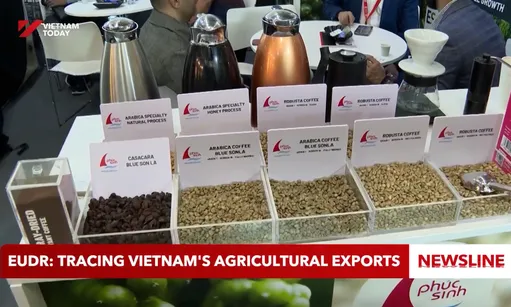
EUDR: Tracing Việt Nam's agricultural exports
Economy 00:02:49.514667.00In about six months, the European Union's Anti-Deforestation Regulation will come into effect for large and medium-sized enterprises. This regulation affects many of Việt Nam's key export items such as coffee, rubber, wood, cocoa, and soybeans. In this context, Vietnamese businesses are entering a crucial phase to meet the new requirements of the European market.
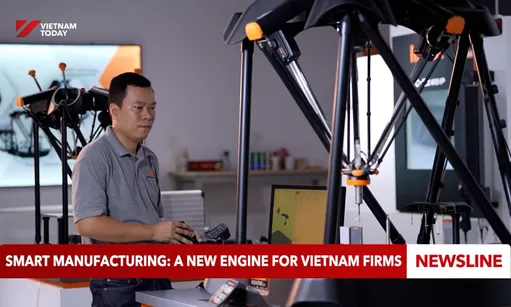
Smart manufacturing: A new engine for Việt Nam firms
Economy 00:03:26.677333000000004.00The smart manufacturing market is expected to reach nearly 790 billion USD by 2030. Supported by the Politburo’s Resolution 57, businesses are accelerating the adoption of advanced technologies and smart manufacturing.
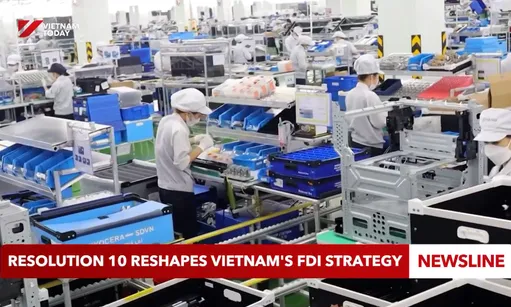
Resolution 10 reshapes Việt Nam's FDI strategy
Economy 00:02:44.672.00Under Resolution No. 10, newly issued by the Politburo, future foreign investment will be assessed not only by the amount of capital it brings to Việt Nam, but also by its technological content, socio-economic impact and ability to strengthen linkages with domestic businesses.
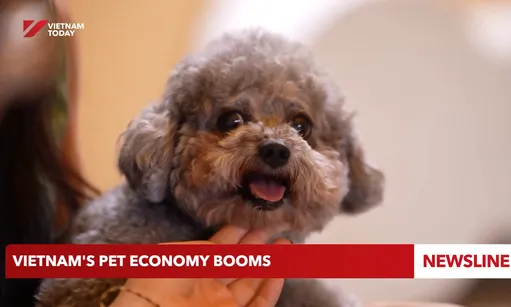
Việt Nam's pet economy booms
Economy 00:03:9.759999999999991.00Việt Nam's pet economy is expanding rapidly, driven by rising demand for pet food and related services. And here are the figures that put its growth into perspective: Việt Nam's pet food market alone was worth an estimated 156 million USD in 2025, and is expected to rise to 168 million this year. It helps create opportunities for a broader ecosystem of high-value services.
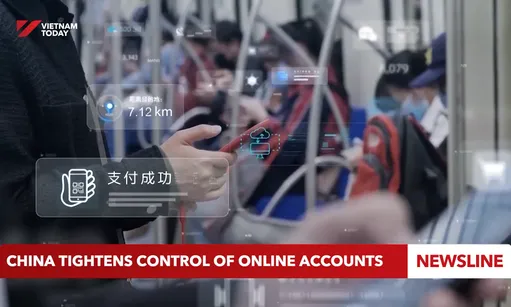
China tightens control of online accounts
Economy 00:01:50.869333.00From 18 June, China’s Cyberspace Administration launched a three-month campaign against fake accounts, impersonation, illegal content and underground trading of social media data. The move is part of the long-running “Qinglang” cyberspace clean-up programme.

Việt Nam advances internet infrastructure & global connectivity
Economy 00:02:49.47200000000001.00As Việt Nam works to strengthen both its physical and economic connectivity, attention is also turning to the digital backbone that will support future growth. At the centre of that push is Internet infrastructure. After operating IPv4 and IPv6 side by side for years, Việt Nam is now preparing for an IPv6-only future, a move aimed at creating a more scalable, efficient and future-ready Internet infrastructure.

Japan moves to promote underground CO2 storage
Economy 00:03:4.383999999999986.00Japan is considering new financial support measures for projects to capture and store carbon dioxide (CO2) underground. The new scheme would cover up to 75% of facility construction costs, even before projects get underway. The aim is to pave the way for the commercialisation of the technology.
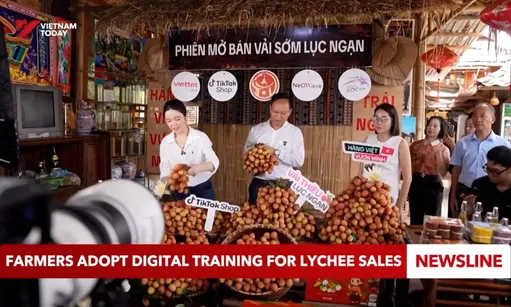
Farmers adopt digital training for lychee sales
Economy 00:03:21.813333.00In Nam Dương commune, Bắc Ninh province, local farmers are embracing digital transformation by learning to market and sell fresh lychees online. With training from e-commerce platforms and digital content creators, farmers recently sold more than 31 tonnes of lychees during a five-hour livestream, successfully broadening market access and bringing quality fruit directly to consumers.
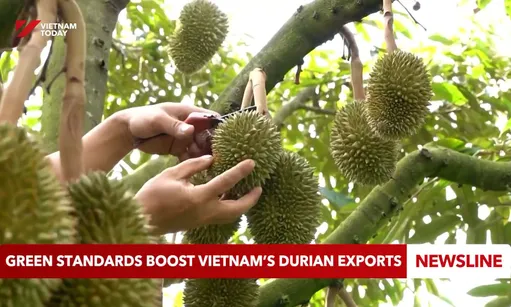
Green standards boost Việt Nam’s durian exports
Economy 00:02:13.909333000000004.00In Đắk Lắk, one of Việt Nam’s biggest durian hubs, growers are shifting towards greener production to meet stricter export standards. By adopting VietGAP certification and ensuring full traceability, farmers are securing steady yields, increasing the fruit’s value and safeguarding the country’s booming durian industry.
Contact us
+(84)24.6327.1999 | Fax: +(84)24.3771.8838
43 Nguyen Chi Thanh Street, Giang Vo, Hanoi, Vietnam
About us
Connect with us


